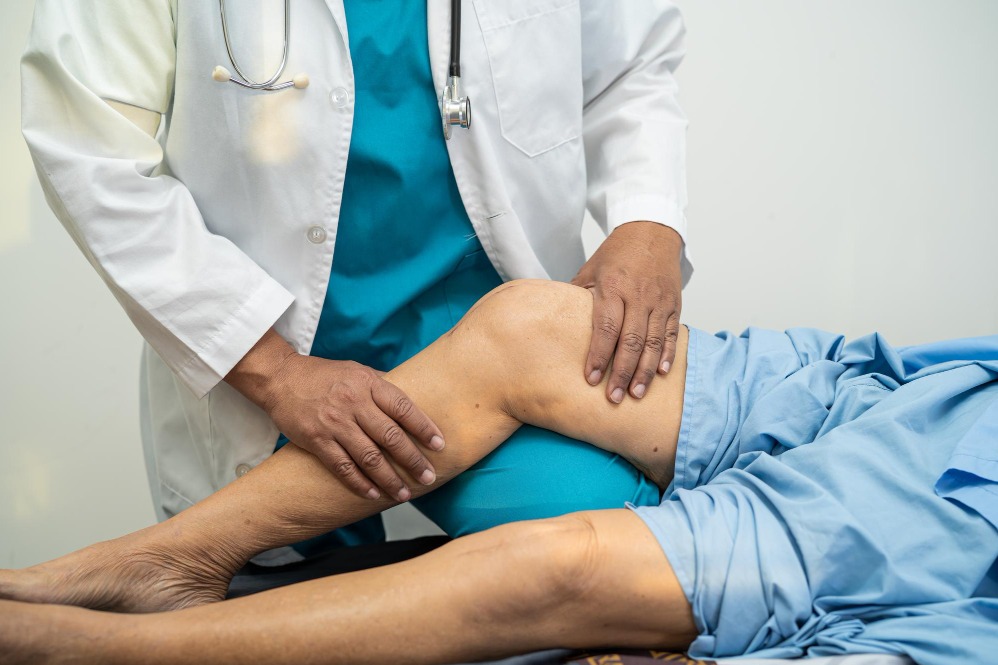
Joint replacement does not finish when the surgical procedure is completed. Recovery continues through rehabilitation, gradual movement, strengthening, functional training, and follow-up.
A Physiotherapist often has an important role during this phase, particularly after knee or hip replacement.
Rehabilitation Starts With Specific Goals
The early goal is not to perform difficult exercises.
Initial rehabilitation generally focuses on safe mobility while protecting the operated joint and allowing tissues to heal.
Depending on the procedure and medical advice, early priorities may include:
- Getting in and out of bed safely
- Beginning appropriate walking
- Performing prescribed movement exercises
- Activating important muscle groups
- Managing stiffness
- Learning how to use walking support
- Practising safe transfers
- Gradually improving joint movement
The programme progresses according to recovery rather than following exactly the same schedule for every patient.
Knee Recovery Needs Consistency
After knee replacement, stiffness and muscle weakness can affect mobility.
Patients may receive exercises designed to progressively improve knee movement, quadriceps strength, walking pattern, and functional activities.
Doing excessive exercise is not necessarily better.
Overloading the joint can aggravate swelling or discomfort, while doing too little may slow functional progress. Rehabilitation needs an appropriate balance.
Hip Rehabilitation Has Different Considerations
Hip replacement rehabilitation focuses on walking, strength, balance, and functional independence.
Depending on the surgical approach and individual situation, patients may receive specific movement precautions during early recovery.
This is another reason generic online exercise programmes should not replace personalised postoperative instructions.
Home Environment Can Affect Recovery
Patients in Kharghar and Navi Mumbai should consider their home environment before returning from hospital.
Useful preparation may include:
- Creating an uncluttered walking route
- Removing loose rugs
- Keeping frequently used objects within easy reach
- Arranging appropriate seating
- Planning bathroom safety
- Organising family assistance where necessary
People living in buildings without convenient lift access may need additional planning.
Know When to Report Problems
Postoperative discomfort is expected to some extent, but new or unusual symptoms should not simply be managed by increasing exercise.
Patients should follow their surgical team's instructions regarding wound problems, fever, unexpected swelling, worsening pain, breathing difficulty, calf symptoms, falls, or other concerning changes.
Progress Is Individual
Comparing recovery with another patient's experience can create unnecessary concern.
Age, muscle strength, preoperative mobility, overall health, type of procedure, surgical factors, and adherence to rehabilitation can all influence progress.
Someone who was highly mobile before surgery may follow a different recovery pattern from a patient who had severe mobility restrictions for several years.
Dr. Atul Patil Orthopedic Surgeon provides joint replacement care for appropriate patients in Kharghar and Navi Mumbai, with rehabilitation forming an important part of the broader recovery pathway.
For patients throughout Maharashtra considering joint replacement, it is useful to think about physiotherapy before surgery rather than only afterwards. Understanding rehabilitation expectations can help with home preparation, family planning, work leave, and realistic recovery goals.
Surgery changes the damaged joint. Rehabilitation helps the patient learn to use the recovering joint effectively in everyday life.
Keywords