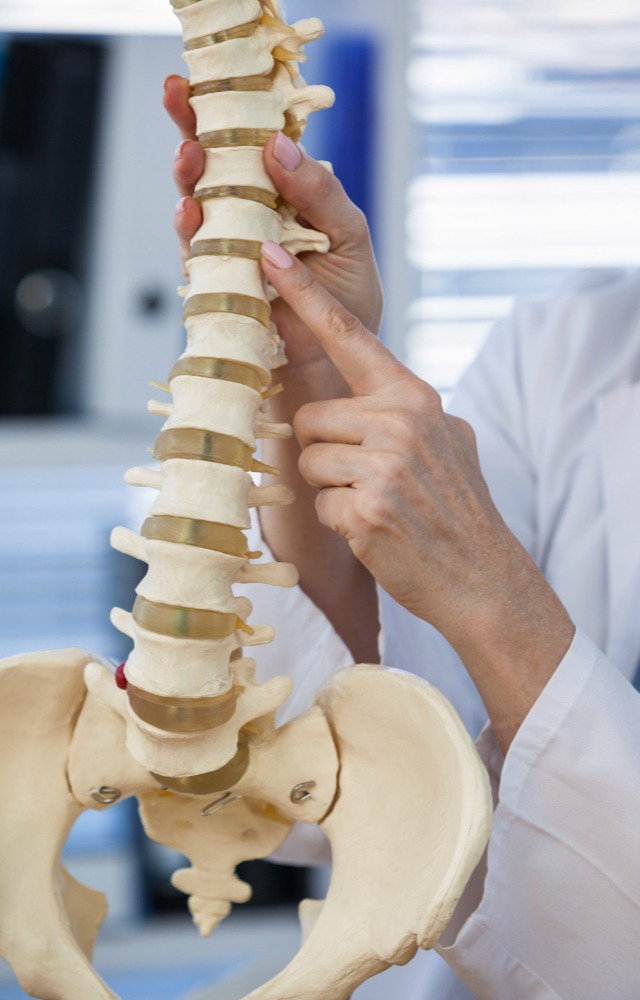
The phrase spine and joint replacement surgeries covers very different orthopedic procedures. A knee replacement treats a damaged knee joint, a hip replacement addresses serious hip-joint disease, while spine surgery may target nerve compression, instability, deformity, trauma, or another structural problem.
Because these operations have different indications, surgery should never be considered solely because pain has persisted for a certain number of months.
When Is Joint Replacement Considered?
Joint replacement may be discussed when structural joint damage has become significant enough to affect everyday function.
Patients with advanced knee or hip problems may report:
- Pain while walking
- Difficulty climbing stairs
- Significant stiffness
- Reduced walking distance
- Pain during routine activities
- Increasing dependence on support
- Sleep disturbance due to joint discomfort
- Limited improvement despite appropriate conservative care
X-rays and clinical findings help determine the extent of joint damage, but the decision is not made from an X-ray alone.
The patient's symptoms and functional limitations are equally important.
Spine Surgery Uses Different Criteria
Spine surgery is not the spinal equivalent of joint replacement.
Depending on the condition, surgery may be considered for persistent nerve compression, spinal instability, certain fractures, significant stenosis, deformity, or other structural abnormalities.
A surgeon evaluates neurological findings, imaging, severity of symptoms, functional limitations, previous treatment, and the likelihood that a particular procedure can address the identified problem.
Conservative Care Still Has an Important Place
Before elective surgery, appropriate non-operative measures may be considered when clinically suitable.
These can include medication, physiotherapy, exercise modification, weight management, activity changes, or selected interventional treatments.
Failure of one conservative method also does not automatically mean surgery is the next step. The diagnosis may need to be reviewed before the treatment pathway changes.
Questions Patients Should Ask
People considering surgery in Kharghar or elsewhere in Navi Mumbai can make consultations more useful by asking:
- What exactly is causing my symptoms?
- What does the imaging show?
- Are non-surgical options still reasonable?
- What procedure is being recommended?
- What is the intended benefit?
- What are the relevant risks?
- How will rehabilitation work?
- What limitations should I expect during recovery?
- What happens if I postpone surgery?
These questions help patients participate in treatment decisions rather than viewing surgery as an isolated event.
Recovery Planning Matters Too
Successful surgical care includes more than the operation.
Preparation may involve medical assessment, medication review, rehabilitation planning, home preparation, and discussion of postoperative expectations.
After surgery, physiotherapy, wound care, follow-up examinations, movement precautions, and gradual activity progression may be required.
Dr. Atul Patil Orthopedic Surgeon provides spine and joint replacement evaluation in Kharghar, serving patients from Navi Mumbai and surrounding parts of Maharashtra.
The decision to undergo surgery should ultimately connect three things: a clearly identified orthopedic problem, symptoms significant enough to justify intervention, and a reasonable expectation that the proposed procedure can improve the patient's condition.
Careful selection is therefore one of the most important parts of surgical treatment.
Keywords